Finding Your Focus: A Complete Guide to Choosing the Right Celestron Binoculars
Whether you’re scanning the craters of the moon, tracking a rare warbler through the brush, or catching the expression on a quarterback’s face from the nosebleed seats, your choice of optics changes everything. Celestron has spent over 60 years dominating the world of amateur astronomy and outdoor optics, but their catalog is massive.
Choosing the “right” pair isn’t about finding the most expensive model; it’s about matching the technical specs to your specific adventure. Here is how to navigate the Celestron lineup like a pro.
1. Decoding the Numbers: 8 x 42, 15 x 70 and Beyond
Every pair of binoculars is defined by two numbers. Understanding these is the first step in narrowing your search.
- The First Number (Magnification): This tells you how many times closer the object will appear.
- 8x to 10x: Ideal for birding and general use. It’s easy to hold steady without a tripod.
- 12x to 25x: Built for long-range viewing or astronomy. At this level, even tiny hand tremors are magnified, so you’ll likely need a tripod.
- The Second Number (Objective Lens Diameter): This is the size of the front lenses in millimeters.
- 25mm – 32mm: Compact and lightweight; great for hiking and travel.
- 42mm: The “sweet spot” for most users; excellent light gathering without being too bulky.
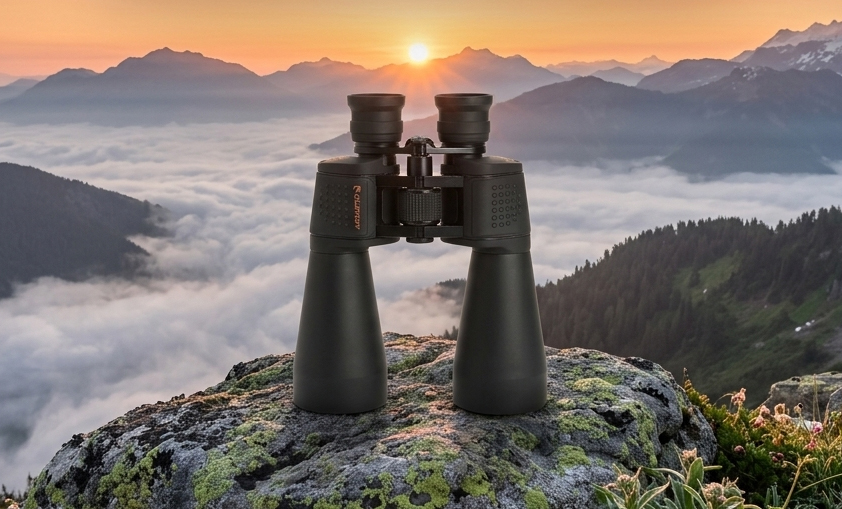
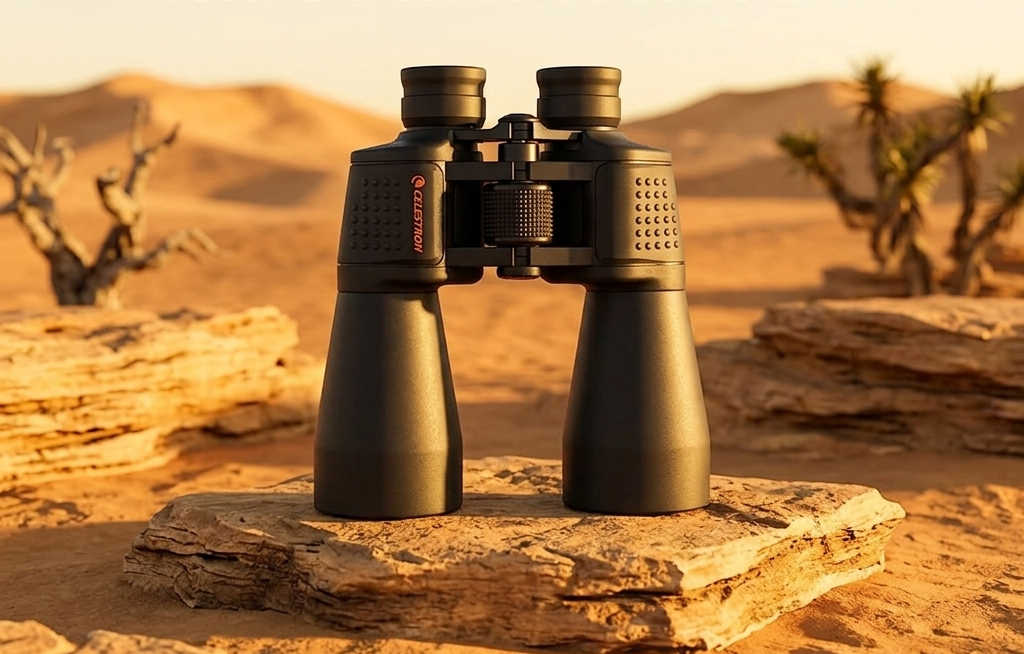
- 50mm – 100mm: “Giant” binoculars. These are light-buckets designed for low-light conditions and stargazing.
2. Match the Model to Your Mission
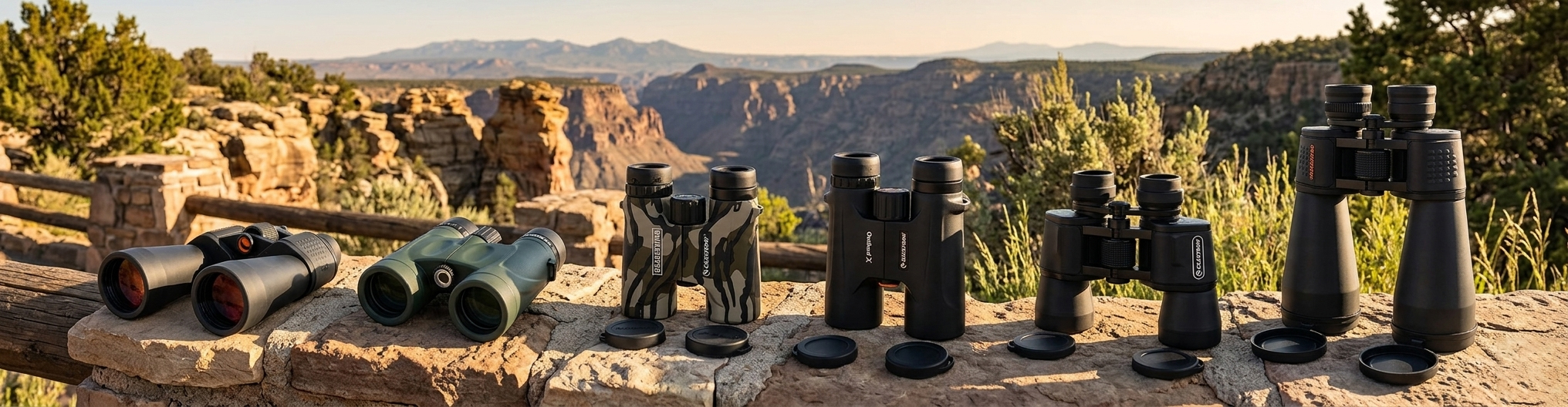
Celestron categorizes their binoculars into “series” designed for specific activities. Here’s where you fit in:
The Stargazer: SkyMaster Series
If your primary goal is the night sky, the SkyMaster line is the gold standard for value.
- SkyMaster 15×70: The most popular “entry-level” astronomy binocular. Large enough to see Jupiter’s moons, yet light enough for brief handheld use.
- SkyMaster Pro: An upgrade featuring better coatings and a more rugged, waterproof housing.
- SkyMaster 25×100: These are essentially two telescopes joined together. They require a heavy-duty tripod but offer breathtaking views of deep-sky nebulae.
The Nature Lover: Nature DX & TrailSeeker
For birding, hunting, or hiking, you need speed, clarity, and weatherproofing.
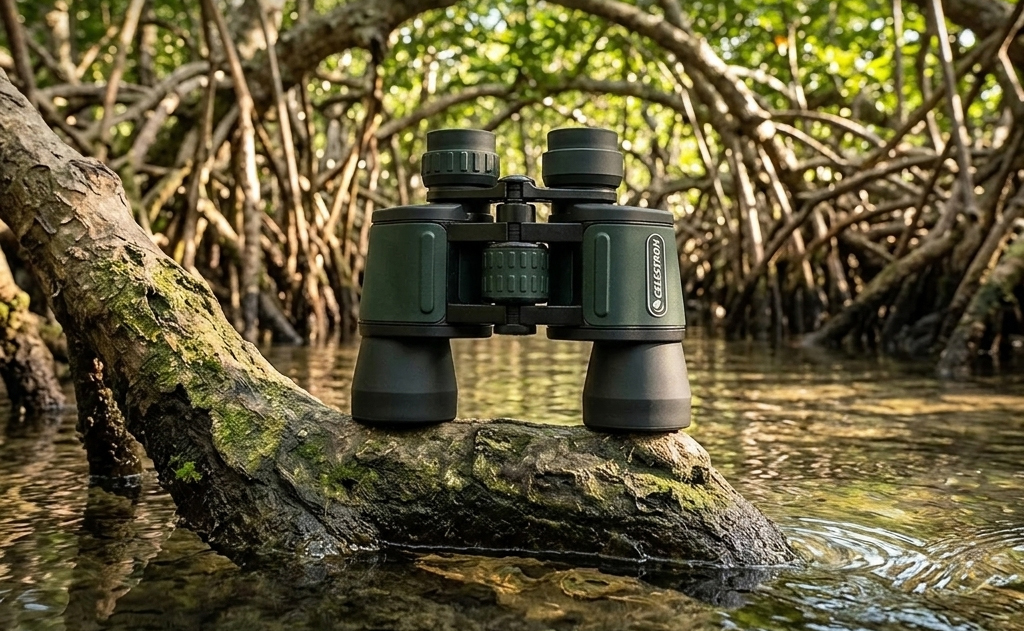
- Nature DX: The best “bang for your buck.” They feature phase-coated BaK-4 prisms (which keep images sharp and bright) and a close-focus distance of just 6.5 feet—perfect for observing butterflies or nearby birds.
- TrailSeeker ED: The “ED” stands for Extra-low Dispersion glass. This specialized glass virtually eliminates “color fringing” (chromatic aberration), providing high-contrast images that are noticeably crisper than standard glass.
The Budget Adventurer: Outland X & UpClose G2
If you want a reliable pair for the occasional camping trip or sporting event without breaking the bank:
- Outland X: A rugged, waterproof “all-rounder.” It’s built to take a beating in the Great Outdoors.
- UpClose G2: The entry-level option. While not waterproof, they offer decent optics for casual daytime use at a very accessible price point.
3. Key Features to Look For
Before you click “buy,” check for these three “make or break” features:
Feature | Why It Matters |
BaK-4 Prisms | High-quality glass that ensures a round exit pupil and better light transmission. Avoid BK-7 if you want maximum brightness. |
Nitrogen Purged | This means the internal air has been replaced with dry nitrogen, preventing the lenses from fogging up inside when you move from a warm car to a cold trail. |
Eye Relief | If you wear glasses, look for at least 15mm–18mm of eye relief so you can see the full field of view without taking your glasses off. |
4. The “Golden Rule” of Binoculars
More magnification is not always better. A common mistake is buying a 20x magnification pair for birdwatching. While you’ll see the bird closer, your “Field of View” (the width of the area you see) will be so narrow that you’ll struggle to find the bird in the first place. For most people, 8×42 is the perfect balance of power, brightness, and stability.