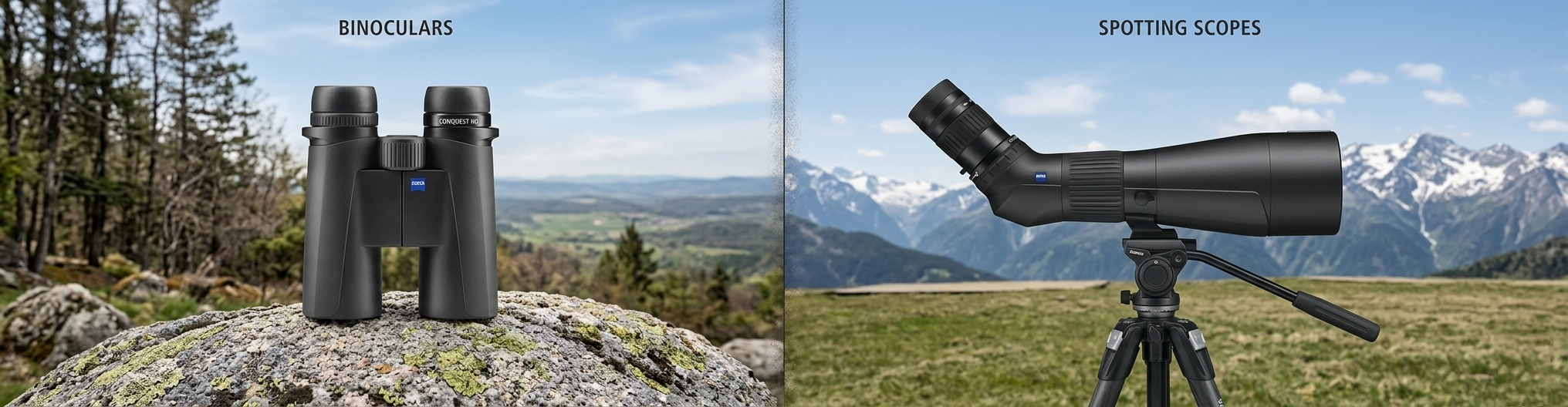
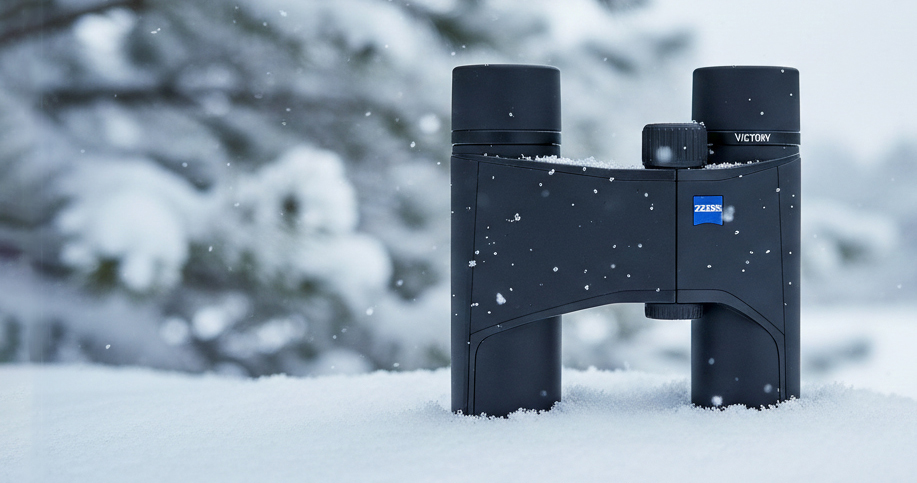
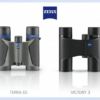
Binoculars are the go-to choice for most outdoor enthusiasts. Their primary strength lies in portability and ease of use.
Stereoscopic Vision: Because you use both eyes, your brain perceives better depth and a more “natural” 3D image.
Field of View (FOV): Binoculars typically offer a much wider FOV than scopes, making it significantly easier to track moving subjects like birds in flight or a tiger moving through tall grass.
Ease of Stabilization: At standard magnifications (8x or 10x), you can easily hold them steady with your hands.
Best for: General wildlife viewing, dense forests, hiking, and situations where you need to react quickly.
Spotting Scopes: The Long-Range Specialist
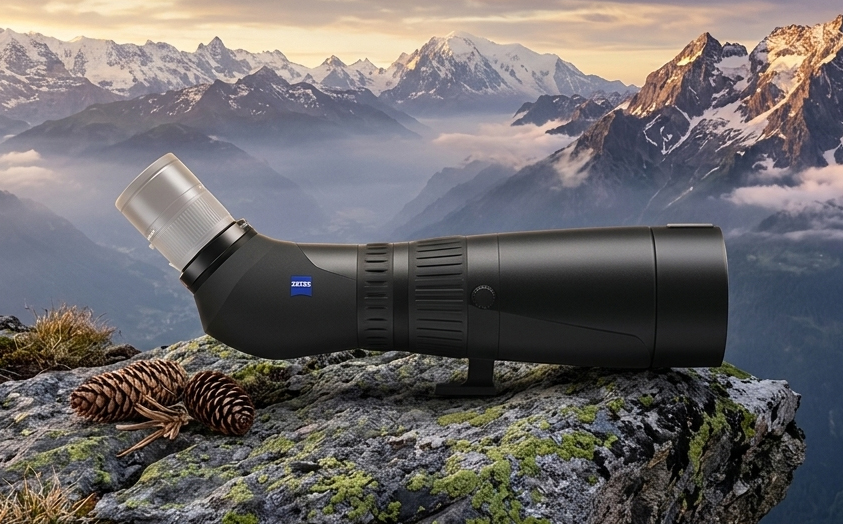
When binoculars reach their limit, the spotting scope takes over. These are essentially mini-telescopes designed for terrestrial use.
Extreme Magnification: Most scopes start at 15x or 20x and can zoom up to 60x or even 100x. This allows you to identify specific markings on a bird or the gear of a distant climber.
Light Gathering: Scopes usually have much larger objective lenses (65mm to 95mm), which helps maintain image brightness even at high zoom levels.
Digiscoping: Scopes are the preferred tool for “digiscoping”—attaching a smartphone or camera to the eyepiece to capture high-detail photos of distant subjects.
Best for: Open landscapes, marshes, high-altitude scanning, and stationary observations where a tripod is available.
A Quick Comparison
Feature
Binoculars
Spotting Scopes
Magnification
Typically 8x to 12x
Typically 15x to 60x+
Portability
High (hangs around neck)
Low (requires a tripod)
Stability
Handheld
Tripod mandatory
Field of View
Wide (easy to find targets)
Narrow (hard to find targets)
Eye Strain
Low (uses both eyes)
Moderate (single-eye viewing)
Which One Should You Carry?
The decision usually comes down to distance and environment.
If you are on the move: Stick with 8×42 or 10×42 binoculars. They provide the best balance of weight and performance for active tracking.
If you are stationary: If you plan to sit at a watchtower or a riverbank for hours, a spotting scope on a sturdy tripod will reveal details that binoculars simply cannot see.
Many professionals carry both: binoculars for scanning the landscape and a scope for a closer look once a subject is located.
Would you like me to suggest a specific pairing of binoculars and scopes for a particular type of terrain, like high-altitude mountains or dense jungles?
It is a long established fact that a reader will be distracted by the readable content of page when looking at its layout. The point of using is that it has a more-or-less normal distribution of letters, as opposed to using ‘Content here, content here’, makings look like readablei English.
rosetyler
@Ruta Vaghasiya The standard chunk of Lorem Ipsum used since the 1500s is reproduced the below for those interested. Sections 1.10.32 and 1.10.33 from “de Finibus Bonorum”.
Ruta Vaghasiya
It has survived not only five centuries, but also the leap into electronic typesetting, remaining more essentially unchanged. It was popularised in the 1960s with the release of Letraset sheets containing Lorem Ipsum passages, and more recently with desktop publishing.


3 comments
Ruta Vaghasiya
It is a long established fact that a reader will be distracted by the readable content of page when looking at its layout. The point of using is that it has a more-or-less normal distribution of letters, as opposed to using ‘Content here, content here’, makings look like readablei English.
rosetyler
@Ruta Vaghasiya The standard chunk of Lorem Ipsum used since the 1500s is reproduced the below for those interested. Sections 1.10.32 and 1.10.33 from “de Finibus Bonorum”.
Ruta Vaghasiya
It has survived not only five centuries, but also the leap into electronic typesetting, remaining more essentially unchanged. It was popularised in the 1960s with the release of Letraset sheets containing Lorem Ipsum passages, and more recently with desktop publishing.